
If your Shopify store has thousands of products, keeping up with SEO can feel overwhelming. Updating titles, descriptions, images, and links manually isn’t just slow; it’s easy to make mistakes that hurt your search rankings.
That’s why automation is a game-changer. With the right tools, you can handle SEO for thousands of products quickly and consistently. Automation saves time, reduces errors, and helps your store get found on Google without spending hours on repetitive tasks.
In this guide, we’ll show you how to automate bulk SEO for Shopify stores with 5,000+ products. You’ll learn simple strategies, useful tools, and practical tips that make managing SEO at scale much easier.
Why Bulk SEO is Crucial for Large Shopify Stores
Managing SEO for thousands of products comes with unique challenges, and understanding its impact is key before you automate.
Impact of SEO on high-volume stores
For a store with thousands of products, SEO isn’t just a nice-to-have; it directly affects your visibility and sales. If your pages aren’t optimized, many products might never show up in Google search results. Even a few small improvements in titles, descriptions, or internal links can lead to noticeable increases in traffic and revenue.
Challenges of manual SEO for 5,000+ products
Updating SEO manually for thousands of products is slow and error-prone. Some common issues include:
- Time-consuming work: Writing meta titles, descriptions, and alt texts for thousands of items can take weeks.
- Inconsistency: When doing SEO manually, it’s easy for formats and keywords to vary across products.
- Mistakes: Duplicate titles, missing descriptions, or wrong links can hurt your rankings.
Without automation, large stores risk falling behind competitors who are using tools to manage SEO efficiently.
Key Strategies for Automating SEO in Shopify
When you’re managing thousands of products, doing SEO manually isn’t realistic. The right approach combines smart planning with tools that handle repetitive tasks. Here are the main strategies that can make a big difference.
Keyword research at scale
The first step is grouping your products into clear categories or collections. For example, if you sell clothing, separate categories like “men’s jackets,” “women’s shoes,” or “kids’ accessories.” Once your products are organized, use keyword tools to find relevant search terms for each category. Focus on keywords that have good search volume and match the intent of your customers.
A common mistake is trying to assign unique keywords for every single product manually—it’s almost impossible at scale. Instead, create category-level keyword strategies and then fine-tune for individual products when necessary. This ensures your SEO stays consistent while still targeting the right searches.
Automating meta tags and descriptions
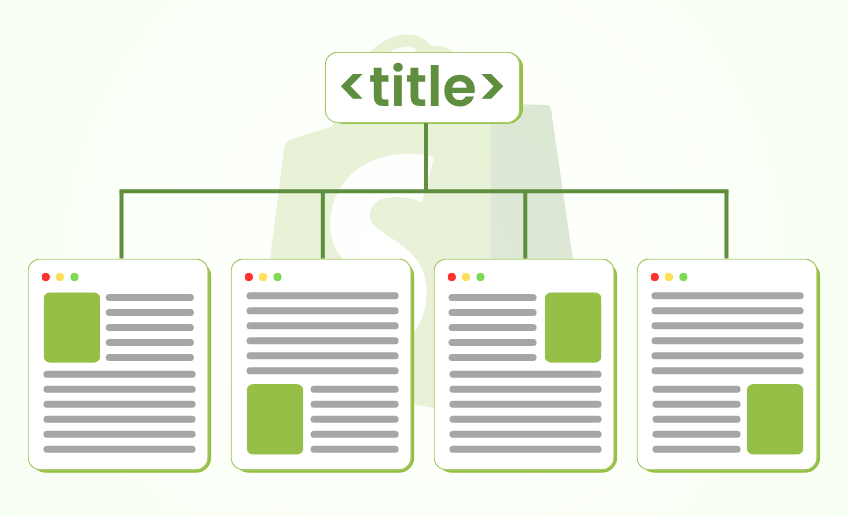
Writing titles and descriptions for thousands of products would take weeks. Templates solve this problem. For instance, you can create a title template like:
[Brand] [Product Name] [Category]
A description template that automatically includes key features. Tools can pull product details directly from your Shopify store and fill the templates, so every page has a unique, optimized meta title and description.
This not only saves time but also reduces errors. Make sure your templates include natural language. Avoid stuffing keywords and check a few examples to ensure they read well for humans.
Bulk image optimization
Images are crucial for both SEO and user experience. Tools can automatically add alt text based on product names or categories. For example, an alt text for a men’s leather jacket could be: “Black men’s leather jacket with zipper and pockets.”
You should also compress images in bulk to reduce page load times. Faster pages improve user experience, reduce bounce rates, and boost rankings on Google. Regularly check for missing alt text or oversized images to keep your store fully optimized.
Internal linking automation
Internal links guide both users and search engines through your site. For large stores, manually linking products or categories is impractical. Automation tools can create links between related products or connect products to blog content automatically.
For example, if a customer is viewing a “men’s running shoe,” automated links can point to “men’s socks” or “running accessories” in the same category. This not only improves navigation but also helps search engines understand your site structure, which can improve your rankings over time.
Tools and Apps to Simplify Bulk SEO for Shopify
Managing SEO for thousands of products is much easier with the right tools. The apps and software you choose can save hours of work and help maintain consistency across your store.
Shopify SEO apps for automation
For large catalogs, Shopify apps can take the heavy lifting out of SEO. The best ones let you set templates for titles and descriptions, generate alt text automatically, and apply changes across thousands of products in one go.
One reliable option is the SEOpilot AI, which allows you to bulk-edit metadata, optimize images, and keep your store’s SEO consistent without spending days on manual updates. By automating these tasks, you reduce errors, save time, and make sure every product page has the foundation it needs to rank.
Other essential tools
Alongside a Shopify SEO app, there are other tools worth considering:
- Google Search Console: Track your store’s performance, identify indexing issues, and see which keywords bring traffic.
- Screaming Frog or other site audit tools: These can crawl your entire store to spot duplicate titles, broken links, missing alt text, and other SEO issues.
- Keyword research and tracking tools: Help you discover trending keywords for your products and track how well your pages rank over time. There are many free extensions available, or you can use paid tools like Ahrefs for better research and tracking.
Combining these tools creates a complete system for bulk SEO management. The Shopify SEO app handles the automation, while audit and analytics tools give you insights to continually improve your strategy.
Conclusion
Managing SEO for a Shopify store with thousands of products can feel impossible if you’re doing it all by hand. The good news is that with the right strategies and tools, most of the repetitive work can be automated. From keyword research and metadata to image optimization and internal linking, automation helps you scale without losing quality.
Using apps designed for bulk SEO makes the process far more efficient, while audit and tracking tools give you the insights you need to keep improving. The result is a store that not only ranks higher in search results but also provides a smoother experience for your customers.
If your store is growing fast, now’s the time to put these systems in place. Automation isn’t just about saving time; it’s about giving every product a fair chance to get discovered.